
Updated October 2, 2026
If you’re shopping for a mortgage right now, you’ve probably noticed something has changed pretty quickly over the last couple of weeks.
Fixed rates have moved higher. Variable rates are still sitting well below them. And, all of a sudden, we’re talking about the possibility of the Bank of Canada raising rates again.
That’s a pretty big change from where we were earlier this year.
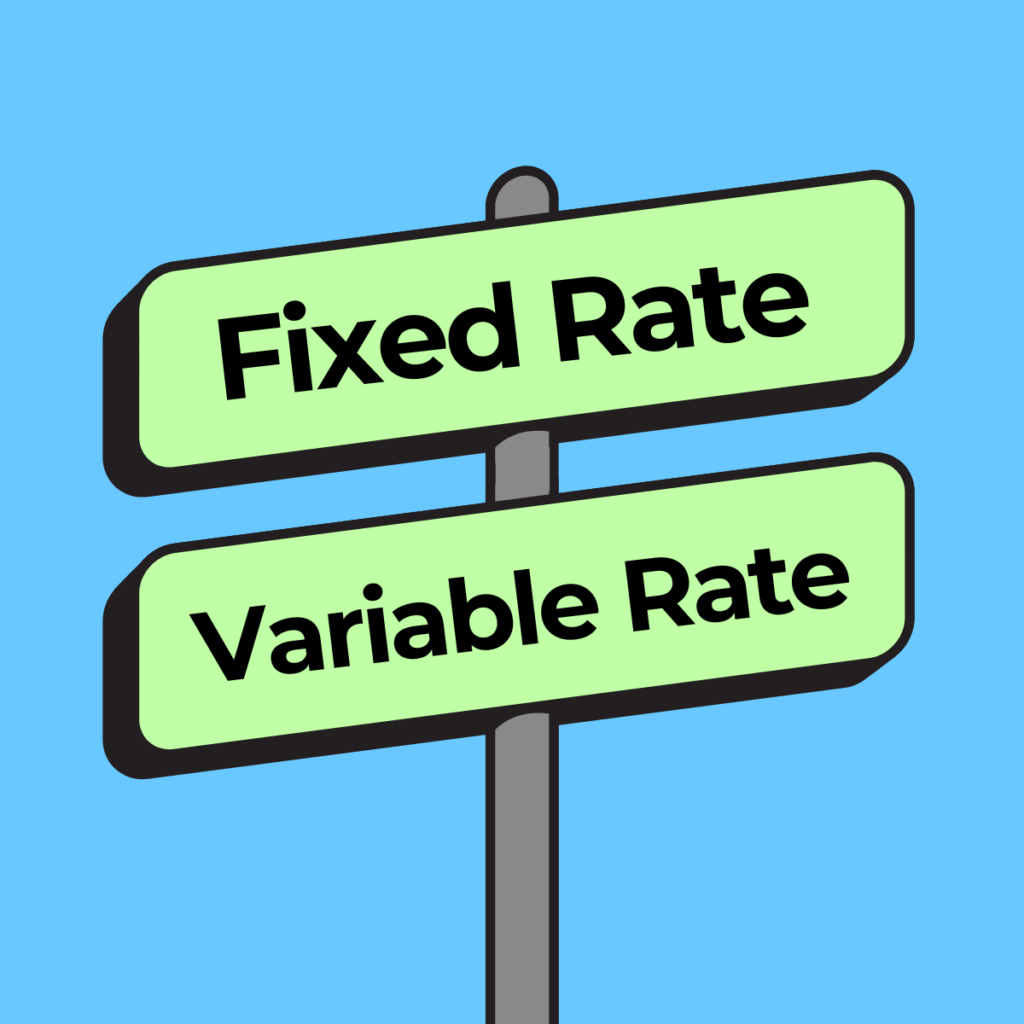
So, should you take the lower variable rate while it’s available, or pay more for a fixed mortgage and know exactly what your payment is going to be?
There isn’t one answer for everyone. And it certainly doesnt help the fact that fixed rates have gone up over 0.50% over the last month.
This article will break down the current outlook between fixed vs variable rates, where they are now expected to be heading as of October 2026, and comparing a fixed vs variable scenario too.
First, where are we today?
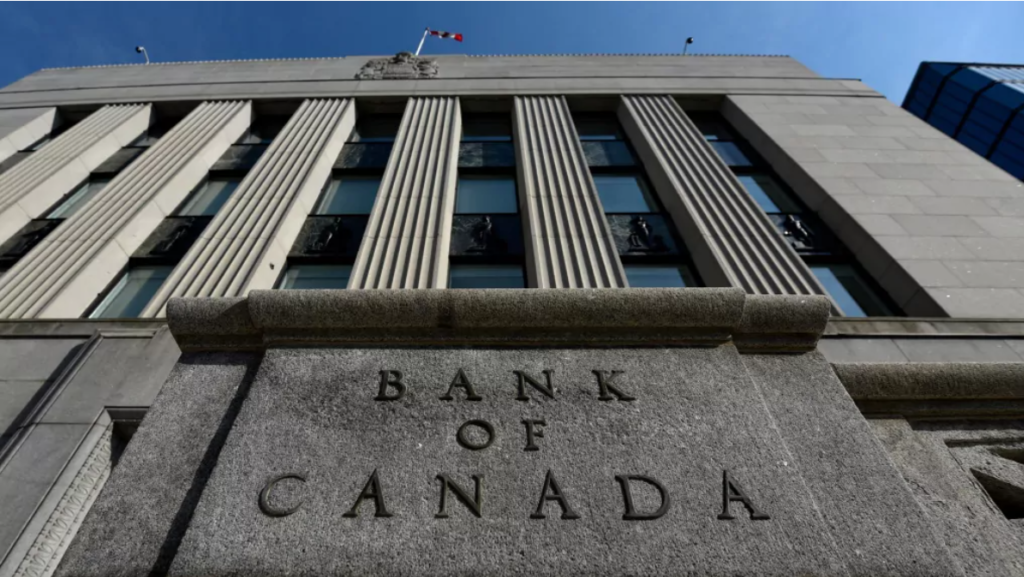
As of October 2, 2026, the Bank of Canada’s overnight rate is 2.25%. It has remained there since October 2025, including at the September 2, 2026 announcement. The next scheduled rate decision is October 28, 2026. (Bank of Canada)
The prime rate posted by the major banks is currently 4.45%. (Bank of Canada), with the exception of TD on their regular mortgage products (TDs mortgage prime rate is 0.15% higher than the industry prime).
For the example in this article, I’m going to use the rates we’re seeing in the market:
3-year fixed: 4.19%
5-year variable: 3.25%
Fixed rates have moved a lot
The 5-year Government of Canada bond yield is sitting around 3.59% intraday today, with a previous close of 3.608% on MarketWatch. The Bank of Canada’s official benchmark yield was 3.62% on October 1. (MarketWatch)
That is a huge move in a relatively short period of time, considering bond yields were in the 3.05% range as of July 26. That is over 0.60%.
One note to mention where many get confused: The Bank of Canada rate and fixed mortgage rates are not the same thing.
The Bank of Canada controls the overnight rate, which has an impact on variable mortgage rates and the prime rate.
Fixed mortgage rates, on the other hand, are largely influenced by the bond market, mainly the Government of Canada bond yields for the relevant term. The Bank of Canada themselves note that longer term yields have been rising as markets respond to higher inflation expectations, higher borrowing needs and expectations that major central banks may need to keep rates higher. (Bank of Canada)
So you can have the Bank of Canada sitting at 2.25% while fixed mortgage rates are still moving higher.
That is exactly what we’ve been seeing. Variabe rates have stayed put, whilst fixed rates have started to increase significantly.
Why are bond yields going up?
There are a few different factors behind it.
Oil and the Middle East
This is the biggest one right now. The ongoing conflict in the Middle East has kept energy prices elevated and disrupted shipping and refining capacity.
The Bank of Canada said in September that CPI inflation has been hovering around 3%, largely because of higher gas prices and warned that the longer high oil prices and refinery margins remain elevated, the greater the risk that those costs spread into other goods and services. (Bank of Canada)
The aftereffect of this: If inflation is expected to stay higher for longer then investors generally demand higher yields on longer-term bonds.
Higher bond yields can then put upward pressure on fixed mortgage rates, as we have seen over the last month.
Government borrowing
Another factor is the amount of debt being issued by governments.
The Bank of Canada specifically pointed to increased government and business borrowing as one of the factors pushing longer-term yields higher. (Bank of Canada)
Global bond markets
Canada doesn’t trade in isolation.
U.S. Treasury yields and global bond-market conditions can have a major influence on Canadian yields.
We’ve also seen a very significant global bond selloff recently, with U.S. Treasury yields moving sharply higher. Reuters reported that the U.S. 10-year Treasury yield reached 5.256% on October 2. (Reuters)
That doesn’t mechanically determine Canadian mortgage rates, but it is another piece of the broader interest-rate environment.
Could fixed rates actually come back down?
Absolutely. This is important because I don’t think anybody should look at a rising bond yield chart and assume fixed rates are guaranteed to keep climbing.
Here are a number of things that could reverse the bond yield move(potentially):
Oil prices could fall
If the Middle East conflict improves, shipping normalizes, and oil prices decline, we could see some of the inflation pressure come out of the market.
The Bank of Canada specifically identified developments in the Middle East as one of the 2 most important risks to the inflation outlook. (Bank of Canada)
Inflation could cool
If headline inflation comes down and, more importantly, underlying inflation remains under control, investors could start pricing lower future interest rates.
That can pull bond yields down(again, potentially).
Basically:
- Higher oil prices means inflation goes up, which means rates could go up.
- But higher oil prices also make things more expensive for businesses and consumers; the economy could slow down.
- A weaker economy can push rates down.
So the Bank of Canada is stuck between two competing forces:
Inflation pushing rates UP
vs.
Weak economy pushing rates DOWN
That’s why fixed mortgage rates are hard to predict.
Now let’s talk about variable rates
Variable is much more straightforward.
Your rate is generally based on:
Prime +/- your lender’s discount
So if prime is 4.45% and your mortgage is Prime – 0.95%, you’re at 3.50%. If the Bank of Canada raises rates by 0.25% and your lender passes that increase through to prime, your mortgage rate would generally rise by 0.25%.
The reverse is also true. That’s why variable borrowers are much more directly exposed to Bank of Canada decisions. As of October 1st, Economists at UBS are calling for a 0.25% rate hike in October, and another one in January.
(UBS Projections) Most of the big banks are projecting for rates to hold in 2026, with increases happening in 2027. Scotiabank projects a 0.25% rate increase by December 2026.
What could push variable rates higher?
There are a few major scenarios to be watching.
- Oil stays high for longer.
- Energy inflation spreads into other prices.
- The Canadian economy remains stronger than expected.
- The Canadian dollar weakens significantly.
- Trade-related price pressures become larger.
What could push variable rates lower?
If inflation falls, economic growth weakens and the Bank becomes more concerned about the economy than inflation, variable rates could eventually come down.
A significant improvement in the Middle East situation could also reduce energy prices and some of the inflation pressure.
The likelihood of this, in my opinion, is very slim. Projections right now point to higher rates, but of course, anything can happen.
Fixed vs Variable Scenario
I have had alot of questions regarding what comes out ahead between fixed vs variable from a purely savings standpoint. Although this isn’t the correct way to dirctly compare the 2 options, lets use some hypotheticals to do it anyway:
Let’s use a $500,000 mortgage with a 25-year amortization.
We’ll compare:
Option A
3-year fixed at 4.29%
Approximate payment:
$2,720/month
Option B
5-year variable at 3.50%
Approximate starting payment:
$2,503/month
Scenario 1: Variable stays at 3.50%
Let’s say nothing changes for the prime rate, the most unlikely scenario.
You keep the variable mortgage at 3.50% for the entire three-year comparison period.
Over those three years:
Variable interest: approximately $50,515
Remaining balance: approximately $460,403
The fixed mortgage at 4.29% would have paid approximately:
$62,162 of interest
with a remaining balance of approximately:
$464,246
That’s a pretty significant advantage for the variable borrower.
Scenario 2: Variable jumps 0.50% immediately
Now let’s assume the variable rate goes from:
3.50% → 4.00%
The payment rises to approximately:
$2,639/month
Even with that immediate increase, the three-year interest cost would be approximately:
$57,878
That’s still below the approximately $62,162 in interest on the 4.29% fixed mortgage.
Scenario 3: Variable rises 0.50% next year
Let’s say you get:
Year 1: 3.50%
Year 2: 4.00%
Year 3: 4.00%
The approximate payment moves from:
$2,503 → $2,635
Three-year interest:
Approximately $55,325
Again, still below the fixed mortgage.
Scenario 4: Variable rises 0.50% twice
Now lets assume:
Year 1: 3.50%
Year 2: 4.00%
Year 3: 4.50%
Payments would be approximately:
$2,503 → $2,635 → $2,765
Three-year interest:
Approximately $57,687
Still below the fixed mortgage in this example.
Scenario 5: Variable jumps to 4.00% immediately, then 4.50%
Now let’s really stress-test it:
Year 1: 4.00%
Year 2: 4.50%
Year 3: 4.50%
The payment would be approximately:
$2,639 → $2,775
Three-year interest:
Approximately $62,709
At this point, you’re roughly at the same level as, and slightly above, the 4.29% fixed mortgage on a three-year interest cost basis.
The variable mortgage starts with a large rate advantage, but that advantage disappears if rates rise enough and stay there.
Here’s the comparison
| Scenario | Variable rate path | Approx. 3-year interest | Fixed 4.29% |
|---|---|---|---|
| Rates stay flat | 3.50% → 3.50% → 3.50% | $50,515 | $62,162 |
| +0.50% immediately | 4.00% throughout | $57,878 | $62,162 |
| +0.50% after Year 1 | 3.50% → 4.00% → 4.00% | $55,325 | $62,162 |
| +0.50% in Year 2 and Year 3 | 3.50% → 4.00% → 4.50% | $57,687 | $62,162 |
| +0.50% immediately, then another +0.50% | 4.00% → 4.50% → 4.50% | $62,709 | $62,162 |
Illustrative example based on a $500,000 mortgage, 25-year amortization and monthly payment recalculation when the variable rate changes. Actual results will differ by lender and mortgage product.
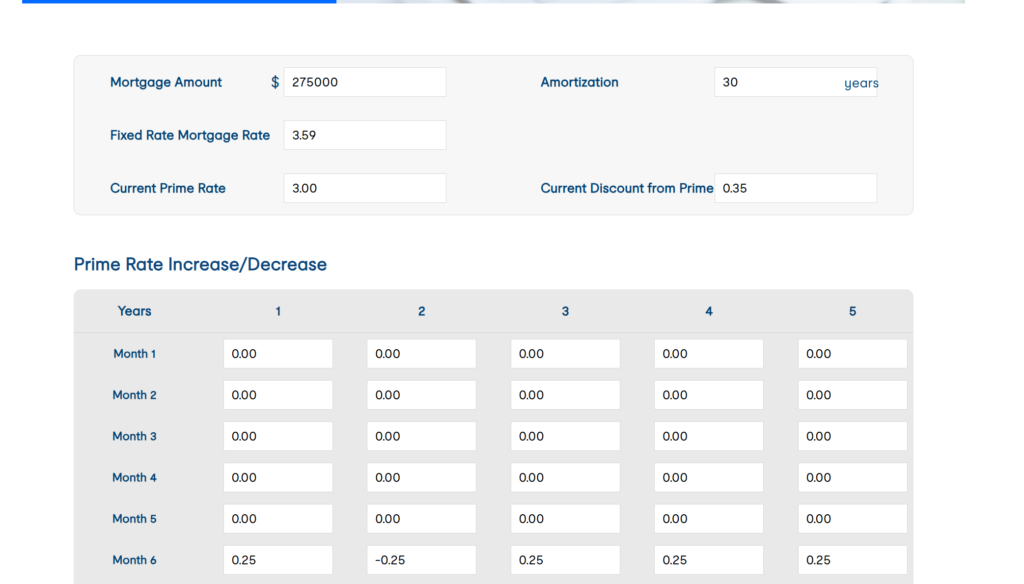
There is a wonderful fixed vs variable calculator, where you can plug in projected rate hikes by the month, to help you determine different fixed vs variable scenarios based on when and at what frequency the prime rate increases happen. You can find it here:
There’s another factor I think is just as important as the rate: the penalty
This is especially important for somebody who may sell their home or refinance during the mortgage term.
A fixed mortgage can come with a potentially significant interest rate differential penalty, depending on the lender and the circumstances.
A variable mortgage only carries a 3 month interest penalty, so if you think you’re going to sell the property in two years, comparing variable to fixed from an interest savings point of view is the least of your worries, especially if you end up taking the wrong product and paying $10,000-$15,000 more in penalties. The interest savings immediately become irrelevant.
What about locking a variable into a fixed later?
This is another misconception I see pretty regularly. Yes, some variable mortgages allow you to convert into a fixed mortgage during the term. But you’re not locking today’s fixed rate. You’re getting the fixed rate that the lender makes available at the time you convert, subject to that lender’s specific terms. These rates could be higher/lower depending on the market, and there is often little room to negotiate on these rates.
Let’s say:
Today:
Variable = 3.50%
Fixed = 4.29%
You decide to take variable.
Six months from now, bond yields have climbed significantly and fixed rates are now:
4.90%
You decide you’re uncomfortable with the variable and want to lock in.
You don’t get to go back and take today’s 4.29%.
You may be converting into something around the 4.90% that’s available at that time.
The flipside of this is, what if fixed rates come down? In this case, it may be in your benefit to stay variable, because you have greater flexibility to convert into a lower fixed rate than what is available today.
So… is fixed or variable better?
This is where I think the conversation needs to be a little more personal.
There isn’t one mortgage that’s automatically better for everyone.
For one borrower, paying 4.29% for certainty could be exactly what they want.
For another borrower, taking 3.50% variable and accepting some rate volatility could make more sense.
It comes down to the person’s situation.
Fixed can make more sense when:
You want complete payment certainty.
Your budget is tight and you don’t have a lot of room for your mortgage payment to increase.
You don’t want to monitor rates or worry about Bank of Canada decisions.
You expect to stay in the mortgage for a significant portion of the term.
You’d rather pay a known premium for certainty.
Variable can make more sense when:
You have strong cash flow.
You can comfortably handle a higher payment if rates rise.
You are comfortable with some uncertainty.
You believe rates could remain stable or eventually decline.
You may sell or refinance during the term.
You understand the mortgage’s conversion and penalty rules.
My October 2026 mortgage-market takeaway
We’re in a much more interesting rate environment than we were a few months ago.
The 5-year Government of Canada bond yield has moved sharply higher and is currently around 3.6%, after sitting close to 3.0% earlier this summer. (MarketWatch)
The Bank of Canada is still at 2.25%, but inflation has moved back toward 3%, energy prices remain elevated and the Bank has acknowledged that the upside risks to inflation have increased. (Bank of Canada)
At the same time, the economic outlook isn’t straightforward. Trade uncertainty is creating downside risks to growth, while higher energy prices are creating upside risks to inflation.
At the end of the day, this is a risk decision, not a fixed vs variable decision. Sometimes the best option is the one that helps you sleep at night.
Alot of homeowners were burnt in 2021 taking variable and seeing their interest rates jump over 3%.
On the flipside, alot of homeowners that took fixed rates in the 1.5% range in 2021 were also glad they did it, chipping away thousands from their balance up until their renewal this year.
For this reason, I have found that less borrowers up for renewal from variable rates are inclined to jump into a variable rate again, which is fair.